A Calm First Step for Mold Worries
If you are reading this, you may have caught a musty smell, a dark patch on a wall, or a stain that keeps coming back. Take a breath. This happens in many homes, and it can be sorted out.
Forestpopularity Mold Help is a referral service for homeowners in Wilmington, DE. It does not do the work itself. It connects you with independent providers in our network who handle mold inspection, testing and removal across the Wilmington area.
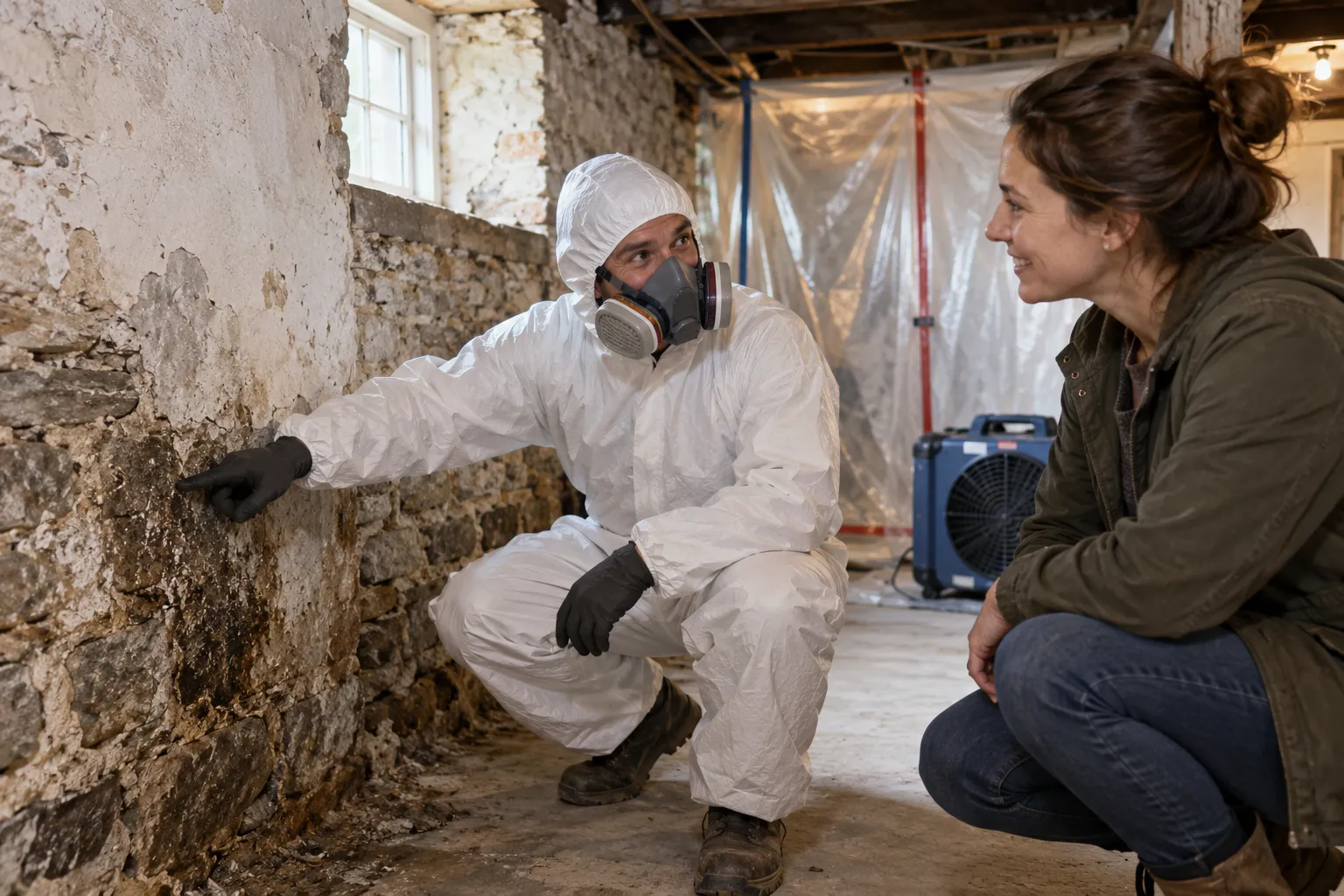
Older houses can hide mold in quiet places. Think of a damp basement corner, the back of a closet on an outside wall, or the space under an old bathroom floor. A past repair may have covered a leak without ending it. A local provider knows where to look.
Here is how it works. You share a little about your home and what you have noticed. Your request goes to a provider who serves your area. The provider reaches out, looks at the problem and gives you a written quote. You decide what happens next, with no obligation.
Want to talk it through first? Request a callback to check provider availability for your street.
Request an Estimate
How It Works
Why older houses deserve a gentler look
A house with some years behind it has a story. Maybe a pipe was patched long ago. Maybe a basement wall has taken on water after many wet springs. Old plaster, original wood and aging plumbing can all hold moisture, and mold loves moisture.
That is why a quick spray-and-wipe often does not last. The cause matters more than the stain. A good provider looks for where the moisture comes from, then plans around it.
What a referral does for you
Searching for help on your own can feel like a maze. You may type "mold inspection near me" and get a long list with no way to tell who fits an older home. Forestpopularity Mold Help narrows that step. You send one request, and it goes to a provider in our network that serves your area.
Who does the work
Independent local providers do the inspecting, testing and removal. Forestpopularity Mold Help does not send crews and does not set prices. Each provider gives its own written quote, and you are welcome to ask questions, compare and take your time.
If a provider offers certified mold testing, ask what that includes and how the results will be explained. Clear answers are a good sign.
What you can expect
You can expect a plain conversation, not pressure. Many providers can respond quickly, but availability varies, so it helps to ask early. Your request is the start of a talk, nothing more.
Serving Homes Across the Wilmington area
Homes in Wilmington and the towns around it come in many shapes. There are colonial and split-level houses with basements that stay cool and damp. There are rowhouses in older neighborhoods, where walls are shared and past repairs are layered on top of each other. Many have aging cast-iron or galvanized pipes that can weep slowly behind a wall.
The weather adds its own pressure. Summers here are humid. Nor'easters push water against foundations. Winter brings repeated frost and thaw, which can open small cracks that let moisture in.
Providers in our network know these houses and these seasons. If your home is in the Wilmington area, you can send a request and see who is available near you.
Request an Estimate
Helpful Things Every Homeowner Should Know
Early signs are easy to miss
Mold rarely starts with a big, dramatic patch. More often it starts with a smell, a faint shadow in a corner, or paint that bubbles. If something seems off, trust that feeling and take a closer look.
Smells tell a story
A musty, earthy odor that returns after cleaning usually means moisture is still hiding somewhere. Pay attention to which room it is strongest in. That detail helps a provider find the source faster.
Basements and crawl spaces
In many local homes, the basement is where trouble begins. Look at the bottom of walls, stored boxes, and the area near the water heater. Cardboard that feels soft is a quiet warning.
Old plumbing and past repairs
Cast-iron and galvanized pipes wear from the inside. A small drip behind a wall can go on for months. If a past repair was patched over, it may hide a slow leak that feeds mold.
Humid summers and winter condensation
Summer air can leave walls and windows damp. In winter, warm indoor air meets cold surfaces and forms moisture. Run exhaust fans and keep air moving to give mold less to work with.
Inspection and testing, explained
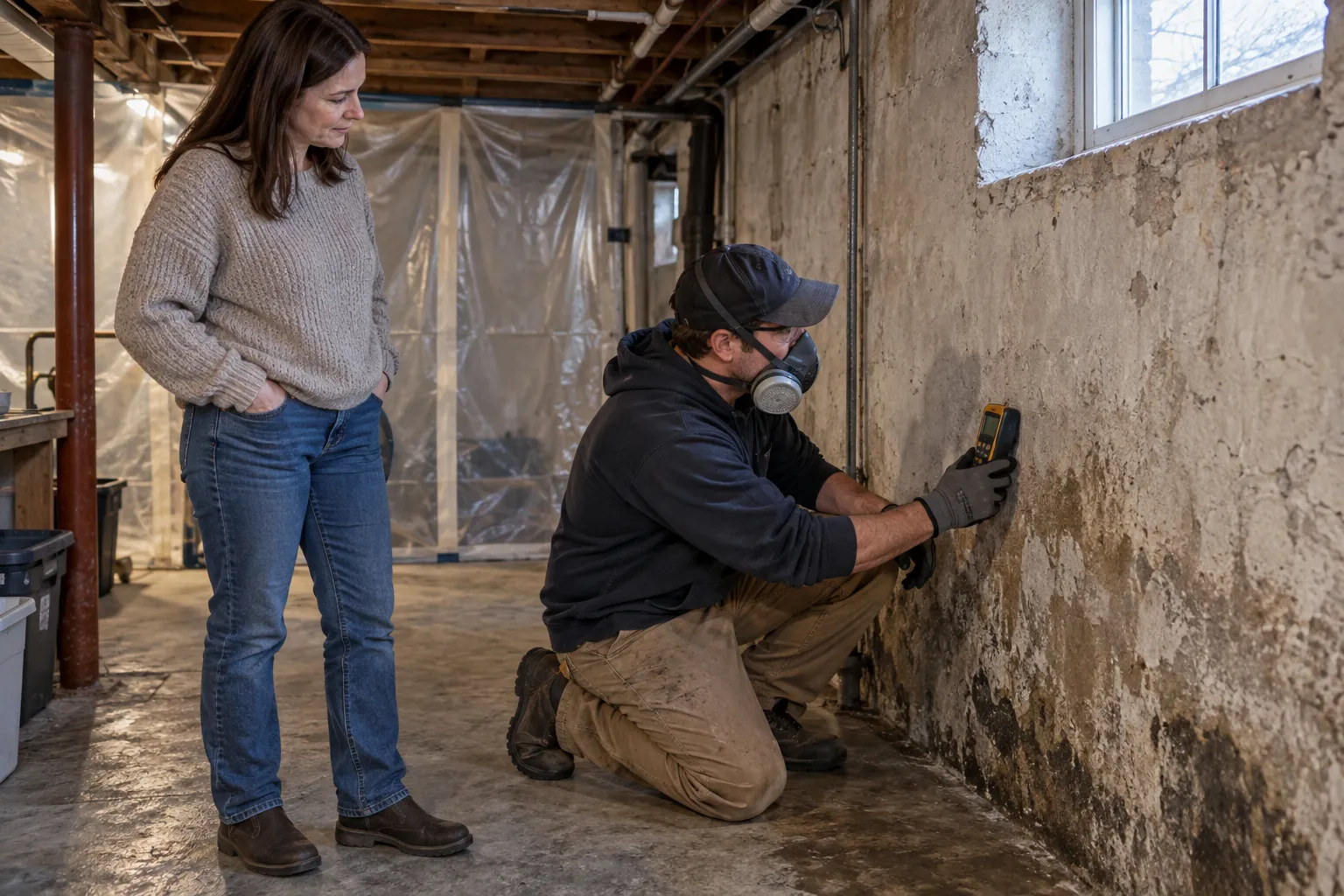
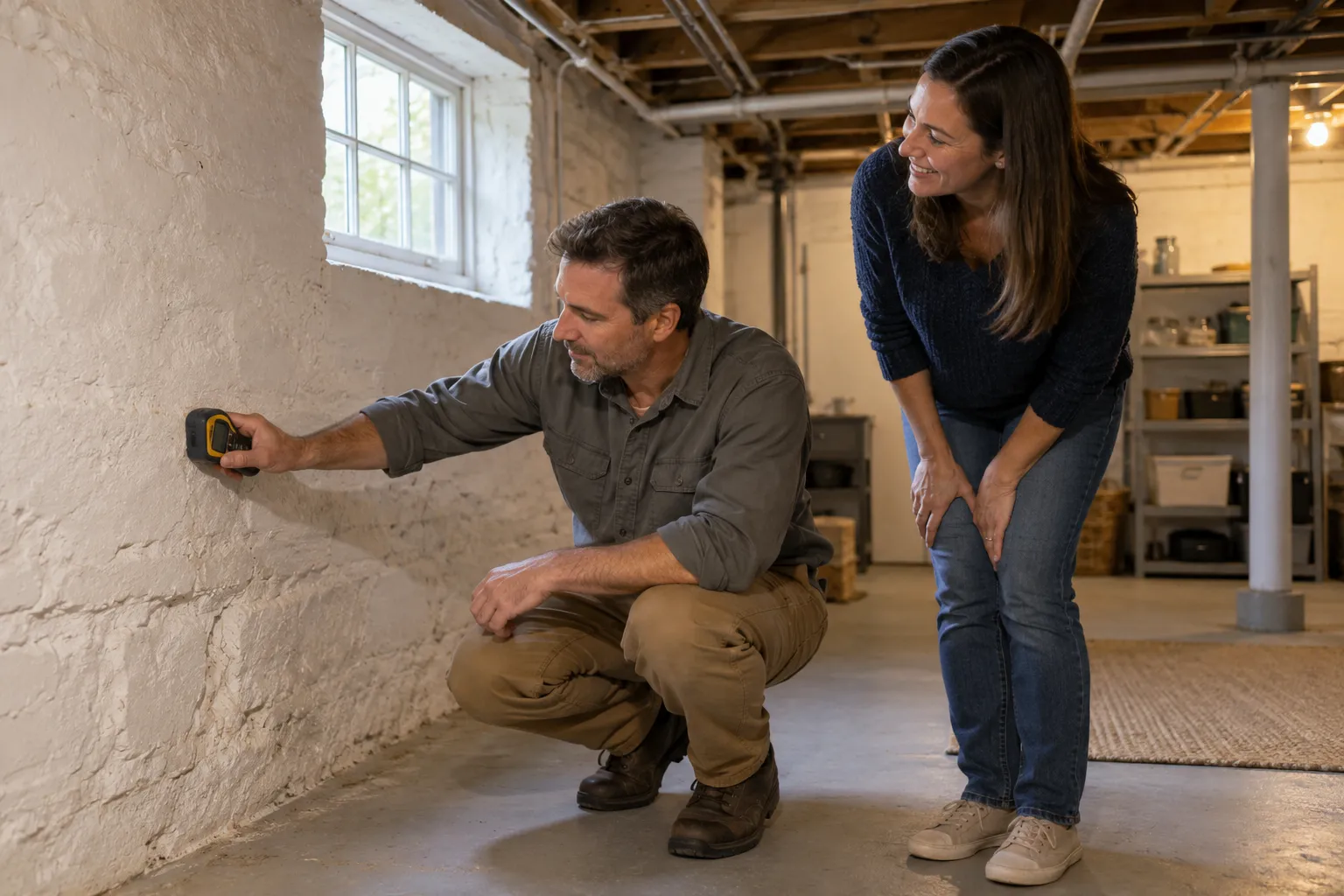
An inspection is a careful look at the home. Testing may use air or surface samples to learn what is growing and how much. Ask a provider why they recommend testing before you agree to it.
What removal usually involves
Residential mold removal often includes containing the area, cleaning or removing damaged material, and fixing the moisture source. Costs vary widely by job, so always ask for a written quote.
Insurance and paperwork
Some policies may cover sudden damage, but many exclude slow leaks. Check your policy, and know that providers can often help document damage for a claim.
When to reach out
If you see spreading growth, smell mold in more than one room, or someone in the house is bothered by the air, it is a good time to ask for help. Small problems cost less to fix than big ones.
Ask About Availability
Not sure if what you found is mold? That is a very normal place to start. Tell us what you see, and a provider can help you understand it.
Request a callback to check provider availability in your area, or use the request form whenever it suits you. There is no obligation, and no pressure.
Request an Estimate